 Kaufman International
The Revolution Is Here
The revolution wasn't televised. The change is already here. That is great news!
While a lot of digital ink is spilled over the AI revolution, the real revolution already happened and nobody outside tech noticed.
When the internet started, it was every programmer for themselves, grabbing whatever technology would work. Invisibly to non-technical people, web technologies improved. Standardized methods of sharing data between apps developed and programming languages evolved to make connecting to those methods a simple configuration issue. This allows developers to deliver the functionality users need much faster, using the systems they're already familiar with.
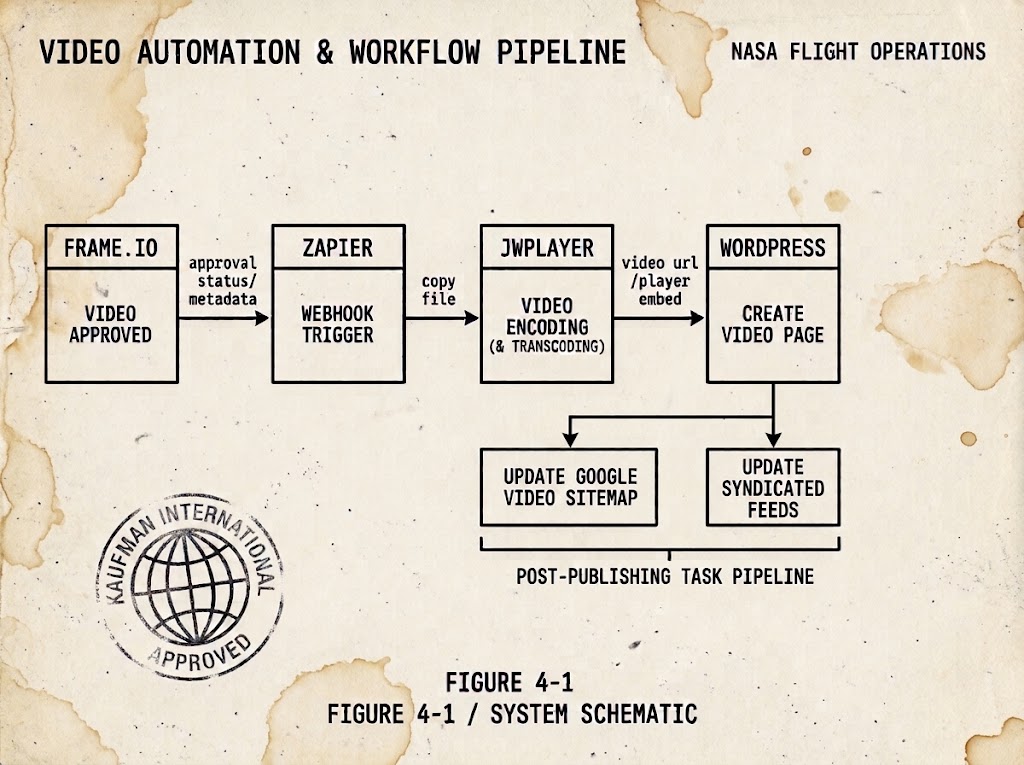
One example is a WordPress client who publishes a site that has a lot of video. The videos are edited in Frame.io, then, when approved, downloaded from Frame.io and uploaded to JW Player for hosting and serving the video. Once a video is ingested, a new video page is created in WordPress. They wanted to add the records to the site_video.xml file Google uses to rank videos, as well as update news feeds like Apple News, with the new content.
The hard parts of the business were figured out. They created great editorial that people want to read and found an audience eager to read it. Now they had a new problem: running the ingestion process manually meant not being able to publish as often as they wanted, and they weren't able to update their SEO or content partners in a reasonable amount of time when they did. What if just approving the video in Frame.io could start a process that would end up with the new video added to the site and optimized for SEO?
How hard is that to build? It turns out, not nearly as hard as building an online publishing brand, and parts of it can be done without code. Frame.io and JW Player both have systems built to communicate with other systems. A "workflow automation tool" called Zapier was used to manage the communication between Frame.io and JW Player. A custom plugin was built for WordPress. It told WordPress that when it received information from JW Player, it should create a new record of type "Video" and update the various sitemaps and syndicated feeds. At every level, the systems are set up to handle the hard parts; they just need code to act as a switchboard operator, moving information around.
I hear from a lot of people interested in improving their processes, or people with processes that don't work but who have no idea that they can even be improved. Because this revolution was invisible, they don't know the tools are here to solve their problems.